

Enterprise networks power everything from mission-critical applications to remote work environments. When performance falters or outages occur, the impact isn’t just technical, it affects productivity, revenue, and customer experience.
Enterprise network monitoring tools give IT teams clear visibility into performance, reliability, and potential issues across devices, traffic, and connections. The right tool helps detect problems early, optimize performance, and keep systems running smoothly.
In this guide, we walk through the top eight enterprise network monitoring tools, what they do best, who they’re best for, and how they compare, so you can find the right fit for your infrastructure needs.
Top 8 Enterprise Network Monitoring Tools Comparison Table
Here's a comparison table based on the tools covered in your article:
Top 8 Network Monitoring Tools for Enterprise
1. SolarWinds Network Performance Monitor
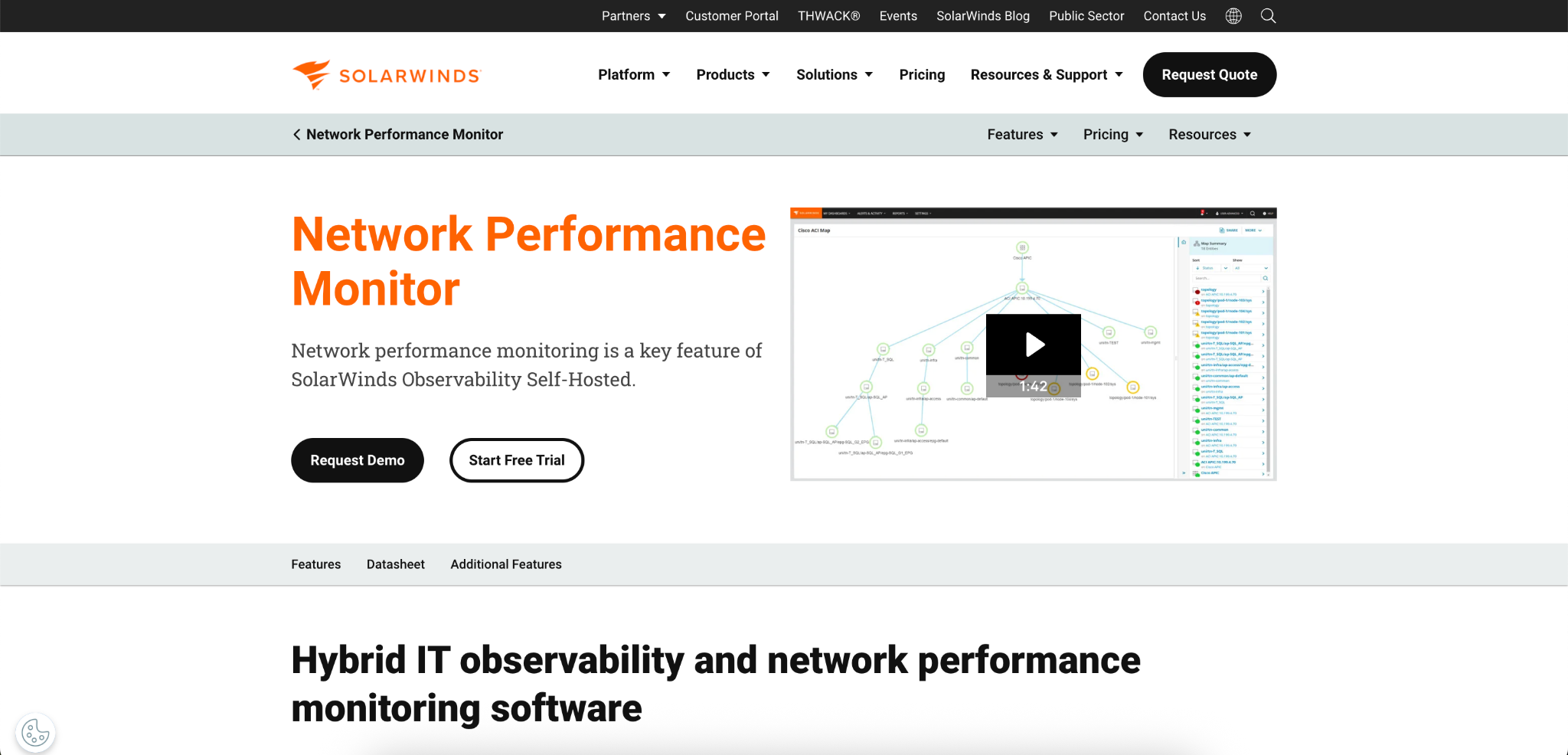
SolarWinds is a long-established IT management software company known for building infrastructure monitoring solutions used by enterprises worldwide. Its Network Performance Monitor (NPM) is one of the most recognized enterprise network monitoring software solutions in traditional infrastructure-focused environments.
NPM provides deep visibility into routers, switches, firewalls, and other network devices across multi-vendor environments. It supports automatic device discovery, dynamic network mapping, real-time performance tracking, and advanced troubleshooting tools like NetPath™ for path analysis.
Where it stands out: SolarWinds is particularly strong in infrastructure-centric environments where detailed device-level monitoring and topology visibility are priorities.
Best for: Large enterprises needing detailed, infrastructure-focused monitoring across on-prem and hybrid networks.
Considerations: Licensing scales per node, which can increase costs in large environments. Setup and customization may require experienced IT teams.
2. Cisco Network Assistant / Prime
Cisco is a global leader in networking hardware and software, trusted by enterprises for mission-critical connectivity and infrastructure solutions. Within its portfolio, Cisco Network Assistant and Cisco Prime provide network monitoring and management capabilities tailored to Cisco environments and large enterprise deployments.
These tools enable IT teams to monitor device health, track performance metrics, and manage configurations across Cisco switches, routers, and wireless controllers. Cisco Prime adds deeper analytics, policy management, and reporting tailored for complex, campus-wide and multi-site networks.
Where it stands out: Cisco Prime integrates tightly with Cisco hardware, making it ideal for organizations operating predominantly within the Cisco ecosystem.
Best for: Enterprises heavily invested in Cisco infrastructure that need visibility, configuration control, and monitoring tightly integrated with Cisco hardware and services.
Considerations: These tools are optimized for Cisco equipment and may be less flexible in multi-vendor environments. Deployment and advanced configuration often require Cisco networking expertise.
3. Datadog Network Monitoring Tool
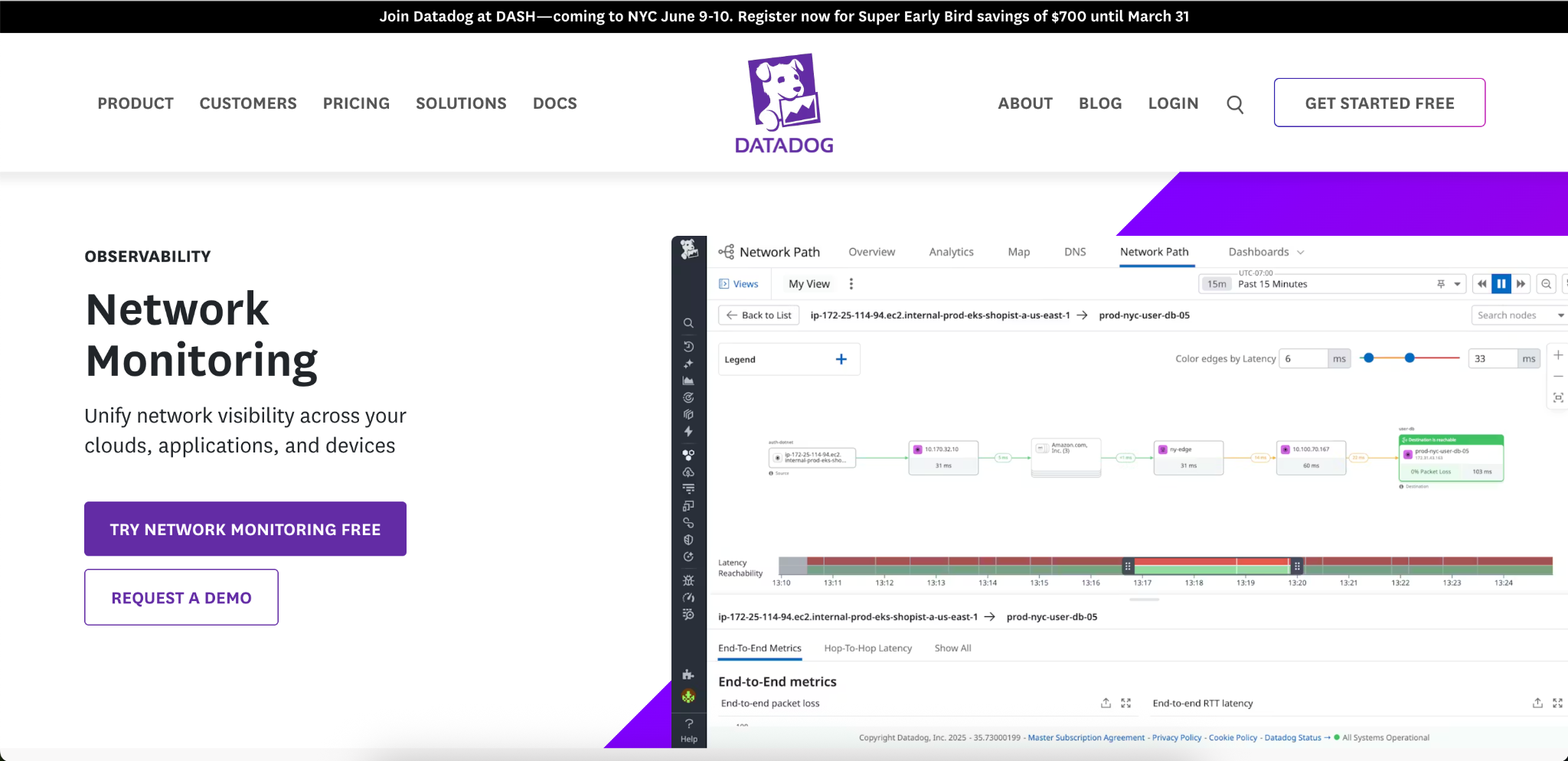
Datadog is a cloud-native observability platform designed to unify infrastructure, application, logs, and network monitoring under a single pane of glass. Trusted by enterprises embracing cloud-first architectures, Datadog’s network monitoring capabilities are built to address the needs of dynamic, modern environments where infrastructure is elastic and distributed.
Datadog Network Monitoring provides real-time visibility into network performance, flows, and dependencies across on-prem, cloud, and hybrid systems. It correlates network metrics with application and infrastructure data, helping teams quickly identify bottlenecks, optimize traffic patterns, and troubleshoot issues across complex stacks.
Where it stands out: Datadog excels in unified observability, enabling teams to correlate network activity with application performance, logs, and infrastructure metrics in one consolidated platform.
Best for: Cloud-centric enterprises and DevOps teams that require unified observability across infrastructure, applications, and network layers.
Considerations: Pricing can escalate with volume (hosts, logs, features), and smaller teams may find the range of capabilities initially overwhelming. Configuration and dashboard tuning may require planning to match specific use cases.
4. Galactis
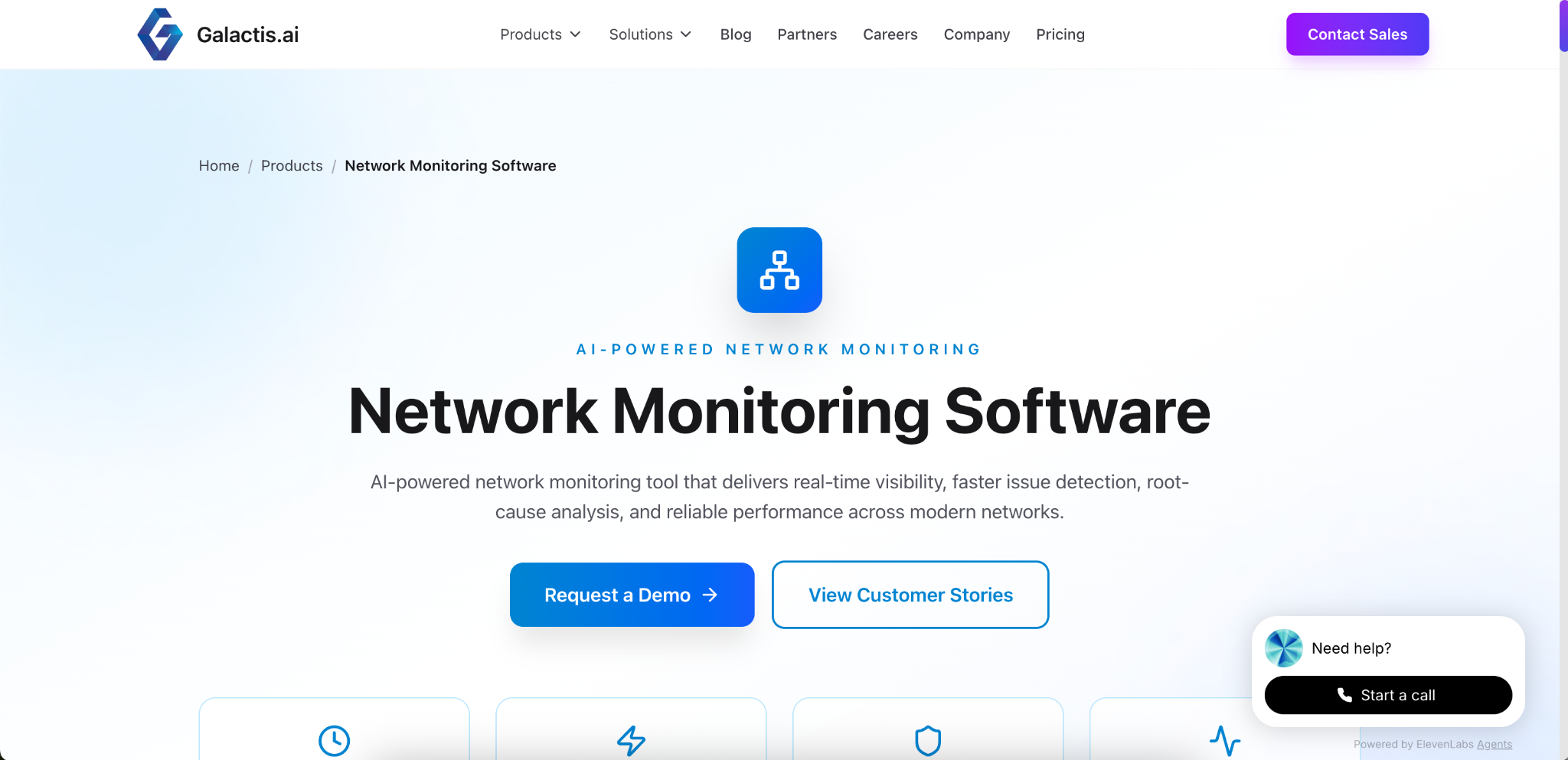
Galactis is a modern network monitoring platform built for enterprises that need proactive visibility and intelligent automation. Instead of relying solely on static thresholds and manual configurations, Galactis uses AI to analyze performance patterns, detect anomalies, and surface actionable insights in real time.
Galactis automatically discovers network devices and dependencies, correlates events across infrastructure layers, and highlights issues before they escalate. Its automated root-cause analysis, noise-reducing alerting, and performance trend predictions help IT teams resolve problems faster with less manual effort.
Where it stands out: Galactis focuses on AI-assisted monitoring and automated insight generation, helping teams shift from reactive troubleshooting to more proactive network management.
Best for: Enterprises aiming to reduce alert fatigue, improve operational efficiency, and transition from reactive monitoring to proactive decision-making with AI-augmented insights.
Considerations: As a newer entrant compared to legacy tools, Galactis may have a smaller install base, but it makes up for it with modern automation, ease of deployment, and data-driven outcomes.
5. ManageEngine OpManager
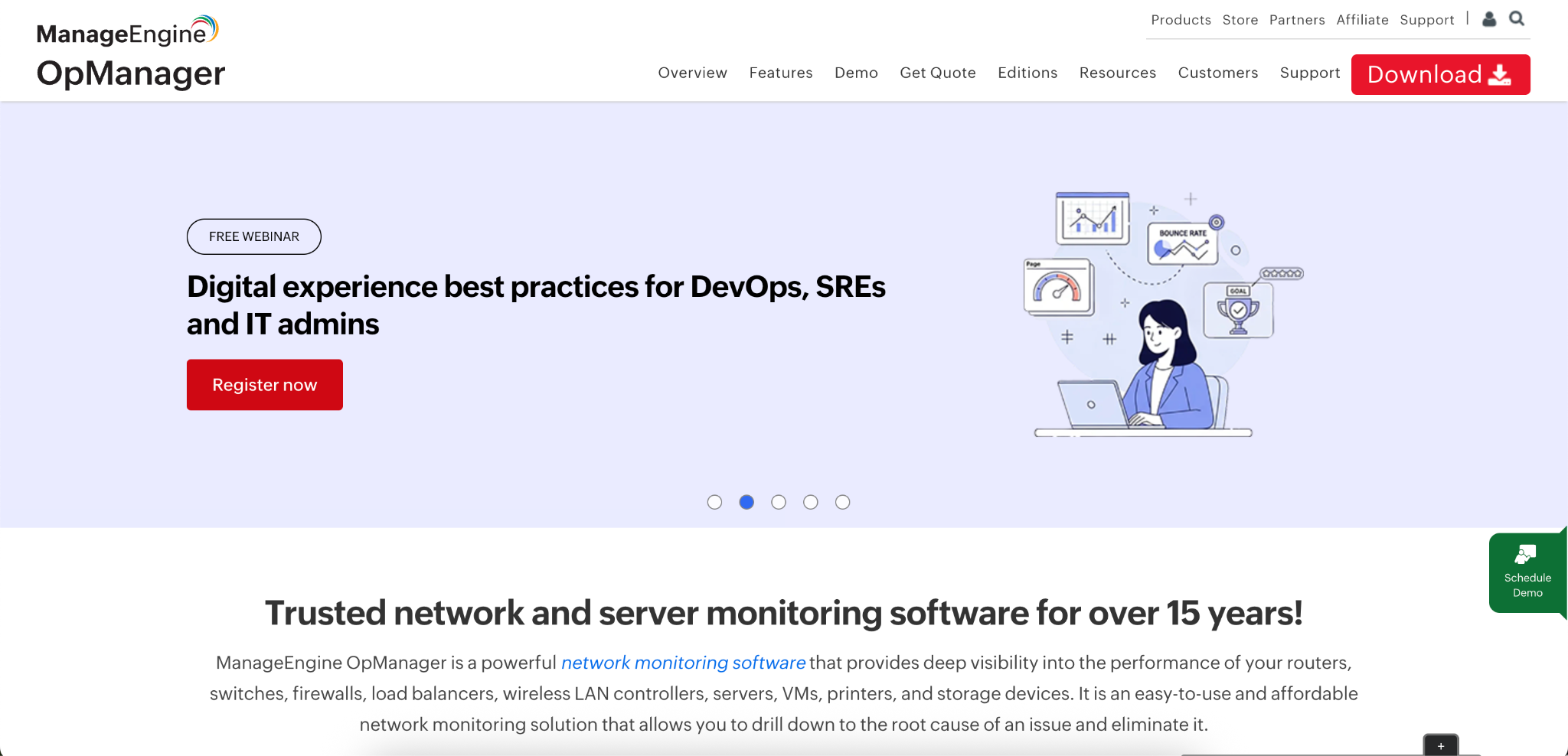
ManageEngine, part of Zoho Corporation, builds a broad suite of IT management solutions used by enterprises worldwide. OpManager is a network monitoring and management platform designed to deliver visibility, automation, and performance insights across both physical and virtual networks.
OpManager offers automated device discovery, customizable network topology maps, real-time performance dashboards, and detailed health metrics for routers, switches, servers, and other infrastructure components. Built-in analytics and alerting help IT teams detect performance issues early and streamline troubleshooting workflows.
Where it stands out: OpManager balances depth and usability, combining infrastructure monitoring, configuration management, and reporting within a single platform suited for growing enterprise environments.
Best for: Mid-sized to large enterprises seeking an easy-to-use network monitoring tool with strong automation, configuration management, and integrated analytics.
Considerations: Some advanced features are tied to higher pricing tiers, and very niche or highly specialized device support may require additional configurations. While comprehensive, the interface can feel dense for new users until teams tailor dashboards to their needs.
6. Paessler PRTG
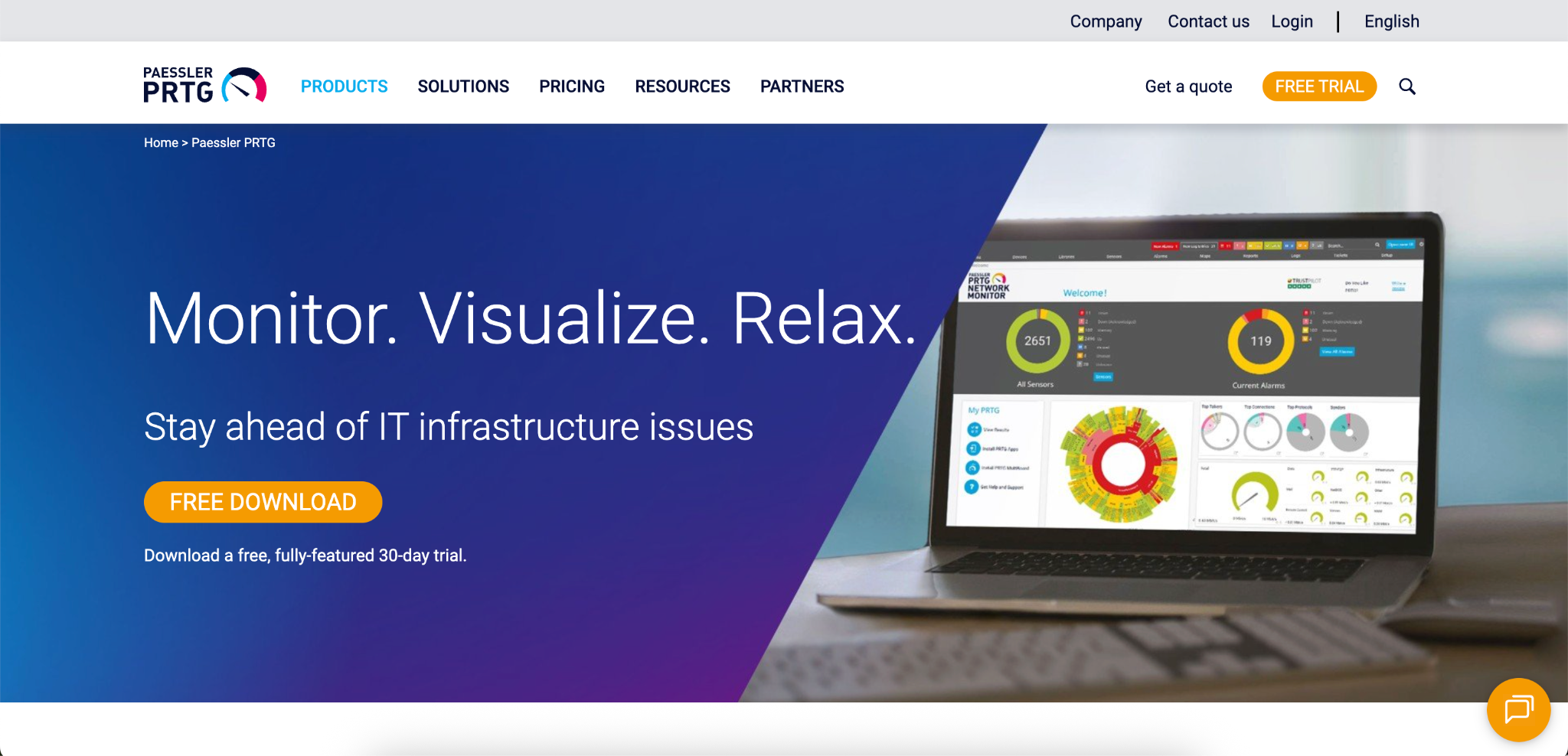
Paessler PRTG is an all-in-one network monitoring solution designed to provide broad visibility across network devices, servers, cloud services, and traffic flows. Its sensor-based model allows IT teams to tailor monitoring to the exact metrics they need, from bandwidth monitoring and latency to service availability and application health.
PRTG automatically discovers network components and visualizes them through intuitive dashboards and maps. With customizable alerts, flexible reporting, and hybrid cloud support, it helps teams stay ahead of performance issues and maintain network reliability without constant manual oversight.
Where it stands out: PRTG’s sensor-based monitoring model provides flexibility, allowing teams to monitor precisely what matters most within their enterprise network environment.
Best for: Organizations of all sizes that want a flexible, comprehensive monitoring platform with granular control over what and how they monitor.
Considerations: PRTG’s sensor-based licensing means costs can grow with the number of sensors needed, and larger environments may require careful planning to optimize sensor usage. Some advanced configurations can take time to refine for larger networks.
7. Splunk Observability + Network

Splunk is a leader in data-driven operations, known for turning large volumes of machine data into actionable insights. Its observability suite brings together logs, metrics, traces, and network data into a unified platform to help enterprises monitor performance and troubleshoot issues across distributed systems.
Splunk Observability + Network extends this capability into network performance by correlating network metrics with applications, infrastructure, and user experience data. Teams can visualize network flows, surface anomalies, and understand the impact of network issues on service delivery, all within a single observability layer.
Where it stands out: Splunk excels in cross-domain correlation, allowing enterprises to analyze network activity alongside logs, metrics, and traces within a unified observability framework.
Best for: Large enterprises with complex, cloud-native environments that need unified observability across applications, infrastructure, and networking.
Considerations: As a comprehensive observability solution, Splunk can be resource-intensive and may require planning around data ingestion and licensing. Smaller IT teams may find setup and cost structure complex compared to more traditional network-focused tools.
8. Zabbix
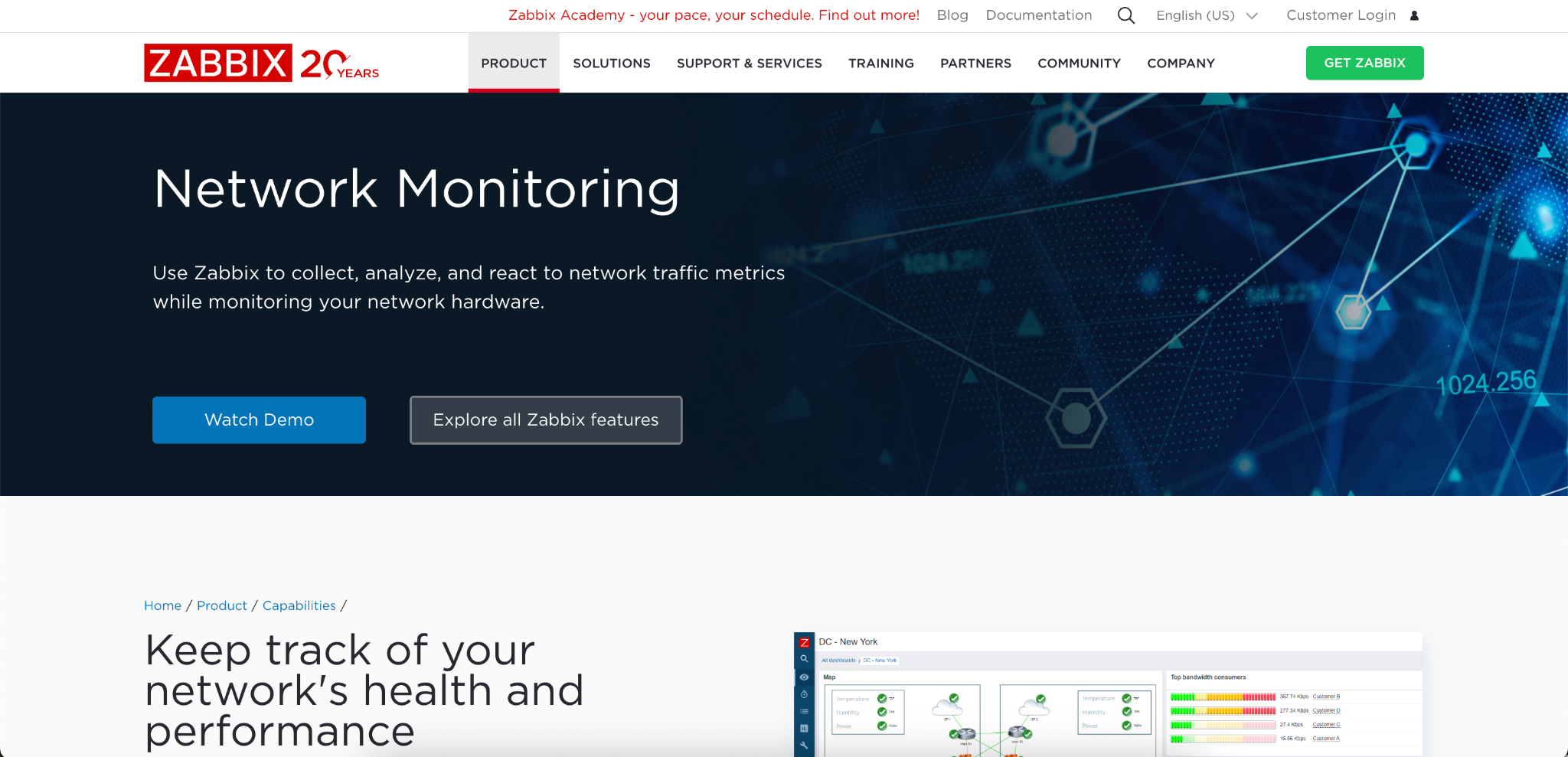
Zabbix is an open-source monitoring platform widely used for tracking network devices, servers, virtual machines, and cloud resources. Known for its flexibility and scalability, Zabbix allows enterprises to monitor performance metrics, availability, traffic, and health across large, distributed environments without vendor lock-in.
The platform supports SNMP, IPMI, agent-based monitoring, and API integrations, making it adaptable for multi-vendor infrastructures. With customizable dashboards, real-time alerting, and strong community support, Zabbix gives technically skilled teams deep control over how their monitoring is configured and extended.
Where it stands out: Zabbix offers deep customization and open-source flexibility, making it well-suited for enterprises that prefer full control over their monitoring stack.
Best for: Enterprises with strong in-house technical expertise that want a highly customizable, cost-effective monitoring solution.
Considerations: Initial setup and optimization can require significant configuration effort. While powerful, the interface may feel less modern compared to some commercial alternatives, and advanced tuning often depends on internal expertise.
Conclusion
Choosing the right enterprise network monitoring software depends on your infrastructure, team maturity, and long-term operational goals.
If your environment is heavily hardware-focused and multi-vendor, tools like SolarWinds or Cisco may align well. For cloud-native and observability-driven setups, platforms like Datadog or Splunk offer deeper cross-stack visibility. If flexibility and cost control are priorities, solutions like PRTG or Zabbix provide strong monitoring coverage with customization options.
For organizations looking to move beyond reactive monitoring and reduce operational noise, AI-driven platforms such as Galactis introduce automation and intelligent insights that support more proactive network management.
Ultimately, the best choice is the one that fits your architecture, scales with your growth, and enables your IT team to maintain performance and reliability without unnecessary complexity.
Frequently Asked Questions
1. What is an enterprise network monitoring tool?
An enterprise network monitoring tool is a software solution that tracks the health, performance, and availability of network devices, traffic, and infrastructure across large-scale environments. It helps IT teams detect issues early, reduce downtime, and maintain visibility across on-prem, cloud, and hybrid networks.
2. Why is network monitoring important for enterprises?
Enterprise networks support critical applications, remote users, and customer-facing systems. Without proper monitoring, performance issues can go unnoticed until they disrupt operations. Monitoring tools help prevent outages, improve reliability, and maintain security posture.
3. What features should I look for in an enterprise network monitoring tool?
Key features to consider include:
Real-time performance monitoring
Automated device discovery
Customizable alerts and notifications
Network topology mapping
Traffic and bandwidth analysis
Scalability for large environments
Support for hybrid and multi-cloud infrastructure
4. Are cloud-based network monitoring tools better than on-prem solutions?
It depends on your infrastructure. Cloud-based tools are often better suited for distributed and cloud-native environments, while on-prem solutions may be preferred for organizations with strict compliance or data residency requirements.
5. How do AI-driven network monitoring tools differ from traditional tools?
Traditional tools rely heavily on static thresholds and manual configuration. AI-driven tools analyze performance patterns, detect anomalies automatically, reduce alert noise, and help identify root causes faster, enabling more proactive network management.
6. How much do enterprise network monitoring tools cost?
Pricing varies based on factors such as number of monitored devices, hosts, sensors, or data volume. Some tools use node-based licensing, while others follow usage-based or subscription pricing models. Enterprises should evaluate the total cost of ownership, including licensing, deployment, and maintenance.
7. Can these tools support hybrid and multi-cloud environments?
Most modern enterprise network monitoring tools support hybrid and multi-cloud infrastructures. However, the depth of cloud integration and visibility varies, so it’s important to assess compatibility with your specific architecture.