

I’ve seen how quickly IT asset management can get messy at scale. One missed renewal, an untracked device, or unused licenses, and costs start piling up without anyone noticing.
At an enterprise level, it gets even harder. Assets are spread across cloud, SaaS, and on-prem systems, and managing them manually just doesn’t work. In fact, studies show that around 30% of SaaS licenses go unused, which is a huge waste every year.
That’s why I rely on IT asset management software to bring everything into one place, track assets automatically, and keep things under control.
Not all tools solve the same problem, though. Some focus on visibility, others on automation, and a few actually help reduce costs in a meaningful way.
In this guide, I’ll walk through the top enterprise IT asset management software solutions and what actually makes each one worth considering.
What Is IT Asset Management Software?
IT asset management software is a platform used to track, manage, and organize IT assets throughout their lifecycle, from procurement to disposal.
It provides a centralized view of hardware, software, and cloud resources, making it easier to know what assets exist, where they are, who is using them, and what they cost.
Instead of relying on spreadsheets or disconnected tools, ITAM software automates asset discovery, keeps records up to date, and links asset data with licenses, contracts, and usage.
In simple terms, it helps manage IT assets in a more structured and efficient way.
Why Enterprises Need IT Asset Management Software
At an enterprise level, assets are spread across cloud, SaaS, and on-prem environments, making it difficult to track everything without a centralized system.
Manual tracking quickly breaks down as the number of assets grows, leading to outdated records and poor visibility.
Unused licenses and redundant assets increase costs without adding value, especially when usage isn’t monitored properly.
Missing renewals or mismanaging contracts can lead to compliance issues and unexpected expenses.
Untracked or outdated assets create security risks, as they may not be patched or monitored consistently.
IT teams spend unnecessary time answering basic questions about assets instead of focusing on higher-value work.
Without proper visibility, planning upgrades, budgeting, and decision-making become guesswork.
Comparison of Top Enterprise IT Asset Management Software
7 Best Enterprise IT Management Software of 2026
1. ServiceNow IT Asset Management
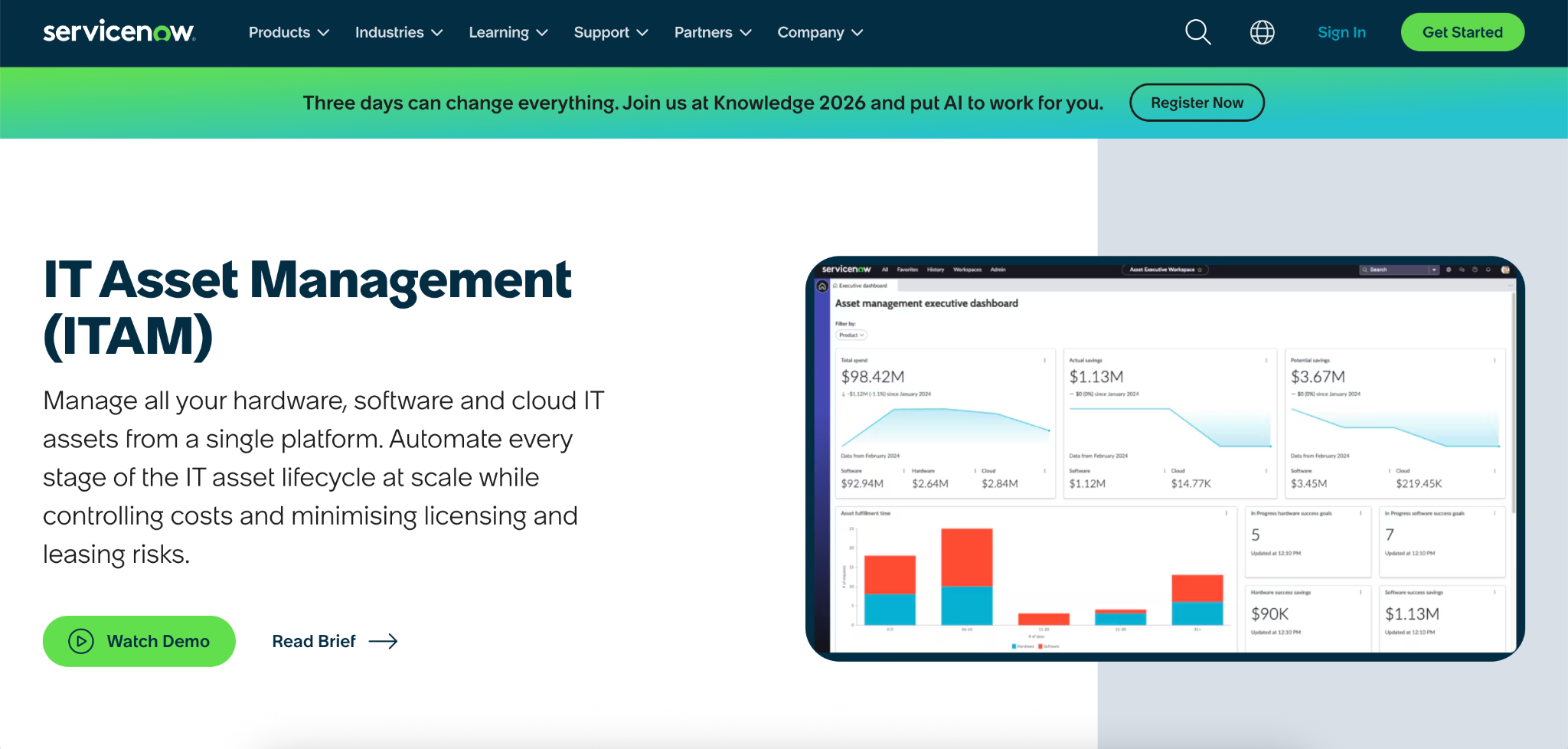
ServiceNow IT Asset Management is often considered the enterprise standard for managing IT assets at scale. It’s built on the broader ServiceNow platform, which means it connects asset data with IT service management, operations, and workflows in one system.
What stands out is how it handles the entire asset lifecycle. From procurement to disposal, everything is tracked and automated, giving a clear, real-time view of hardware, software, and cloud assets.
The biggest strength is its centralized approach. All asset data sits in a single system, making it easier to track ownership, usage, contracts, and costs without relying on multiple tools. This improves visibility and helps reduce manual effort.
It also integrates deeply with ITSM processes. Asset data is directly linked to incidents, changes, and requests, so teams can quickly understand the impact of issues and respond faster.
Automation is another key advantage. Tasks like asset tracking, lifecycle updates, and compliance checks can be handled automatically, reducing errors and improving efficiency.
That said, ServiceNow is best suited for large enterprises. It’s powerful, but it comes with higher implementation complexity and cost, especially for organizations that don’t need its full range of capabilities.
2. Freshservice IT Asset Management
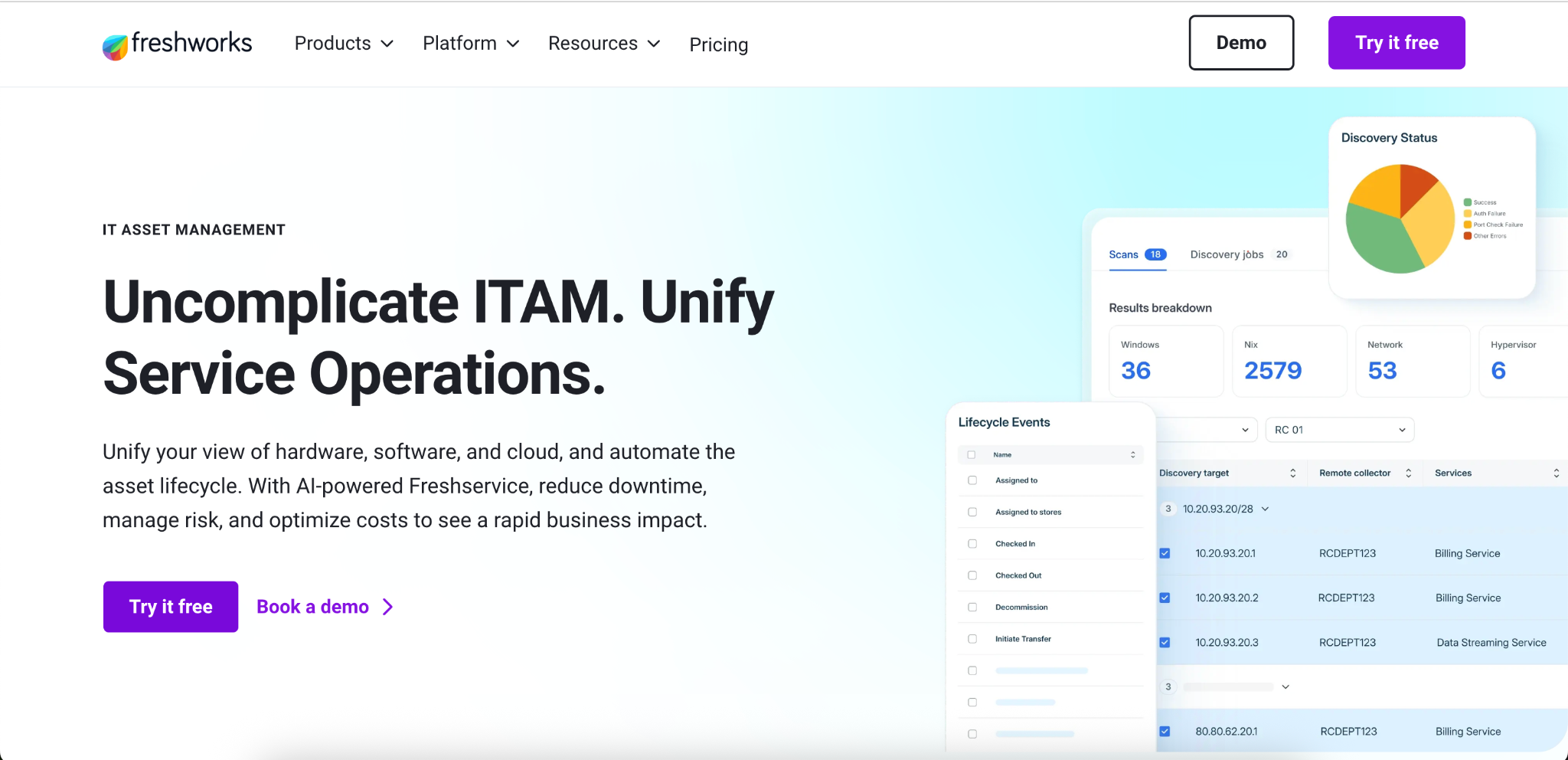
Freshservice IT Asset Management is a cloud-based platform that combines IT service management with built-in asset management, making it easier to manage assets without relying on multiple tools.
Its biggest strength is ease of use. Compared to more complex enterprise platforms, Freshservice is quicker to implement and simpler to manage, while still covering essential ITAM needs.
It supports asset discovery, lifecycle tracking, and software license management, along with automation for routine tasks. Since it’s tightly integrated with its service desk, asset data is directly connected to tickets, requests, and user activity.
The real advantage is speed. Teams can get up and running quickly without heavy configuration, which makes it a strong option for organizations that want value without long implementation cycles.
Best for: Mid-sized enterprises or teams looking for a simple, fast-to-deploy ITAM solution
Consideration: May lack depth for highly complex enterprise environments
3. Galactis IT Asset Management
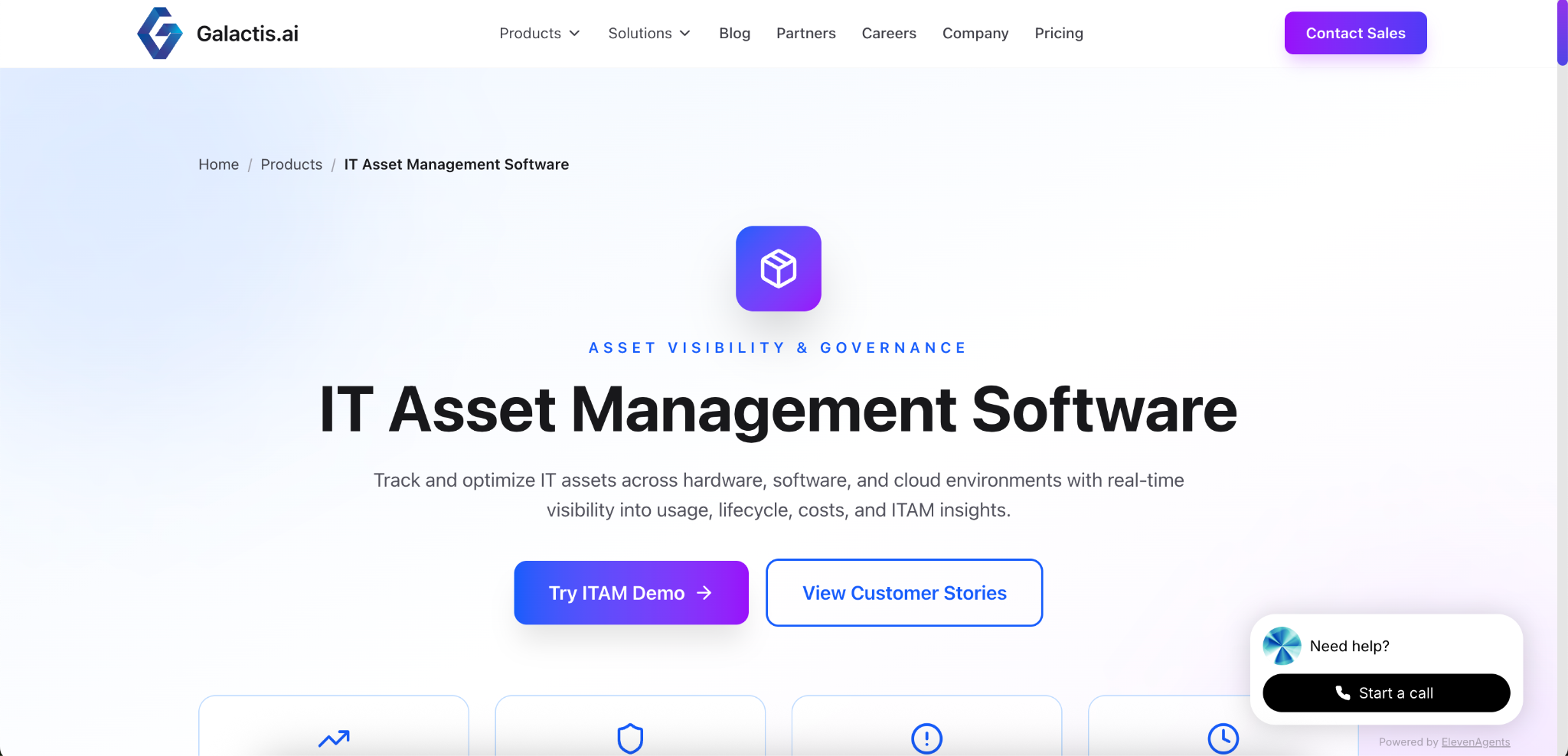
Galactis IT Asset Management is a modern platform designed to manage IT assets across hybrid environments, bringing together visibility, automation, and lifecycle control in a single system.
Its biggest strength is how it handles assets across cloud, SaaS, and on-prem environments without creating silos. Instead of treating these separately, it provides a unified view, making it easier to track, manage, and optimize assets across the entire infrastructure.
It supports automated asset discovery, real-time tracking, lifecycle management, and integrations with existing systems, helping keep asset data accurate and up to date without manual effort.
What sets it apart is its focus on simplicity with depth. It delivers enterprise-level visibility and control without the heavy complexity typically associated with large ITAM platforms.
Best for: Enterprises managing hybrid environments and looking for a balance between control and usability
Consideration: Still evolving compared to long-established enterprise platforms
4. Lansweeper
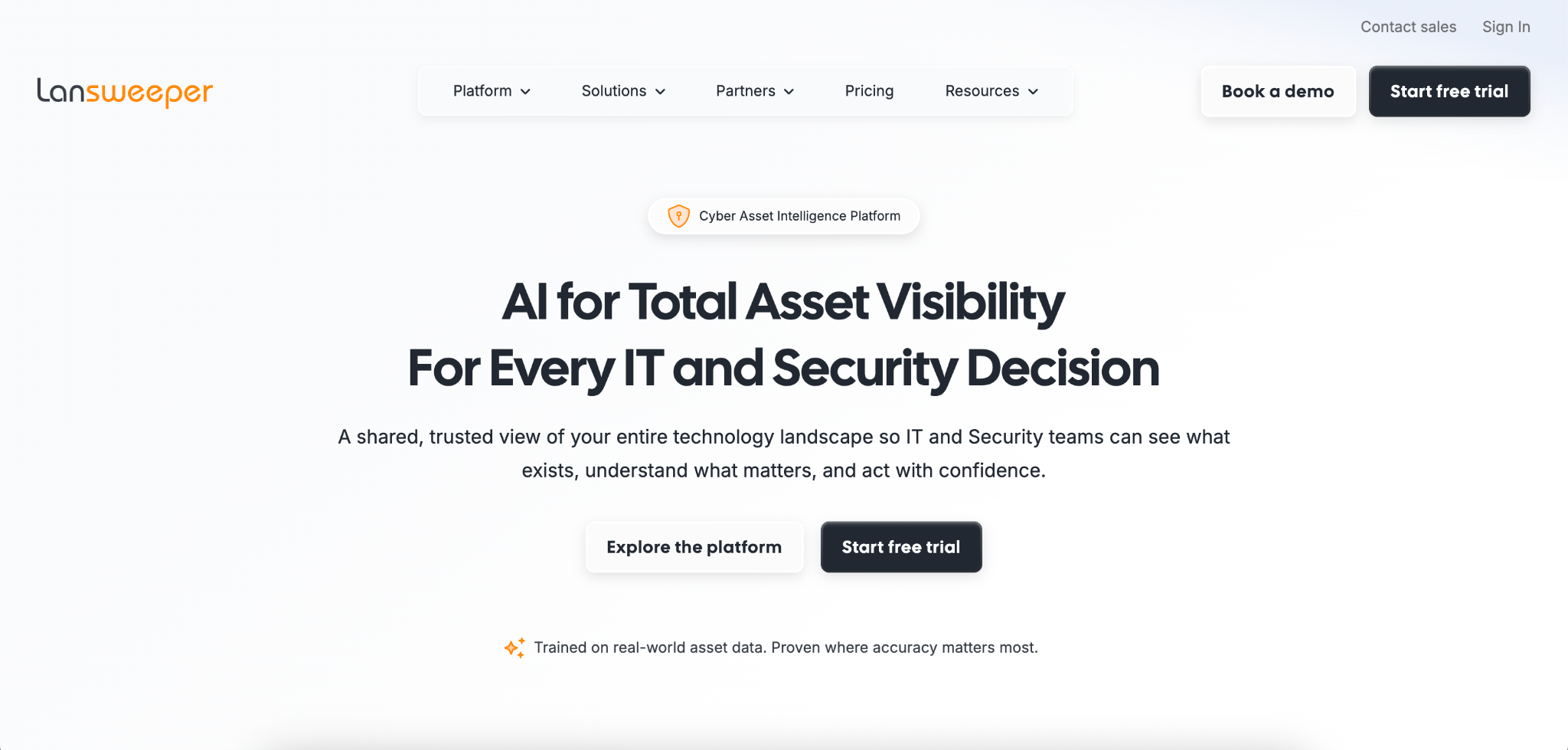
Lansweeper is an IT asset management platform built around one core strength: deep and continuous asset discovery across networks.
Its biggest advantage is visibility. It automatically scans on-prem, cloud, and hybrid environments to detect devices, software, and configurations without requiring heavy manual setup. This makes it easier to build and maintain an accurate, real-time inventory.
It provides detailed insights into assets, including hardware specifications, installed software, and potential vulnerabilities. With its Risk Insights feature, it also helps identify security risks by mapping assets against known vulnerabilities.
Where it really stands out is in discovery depth. For organizations struggling with unknown or untracked assets, Lansweeper makes it much easier to uncover everything in the environment quickly.
Best for: IT teams that need strong network-level discovery and visibility across hybrid environments
Consideration: Limited workflow automation compared to full ITSM-integrated platforms
5. ManageEngine AssetExplorer
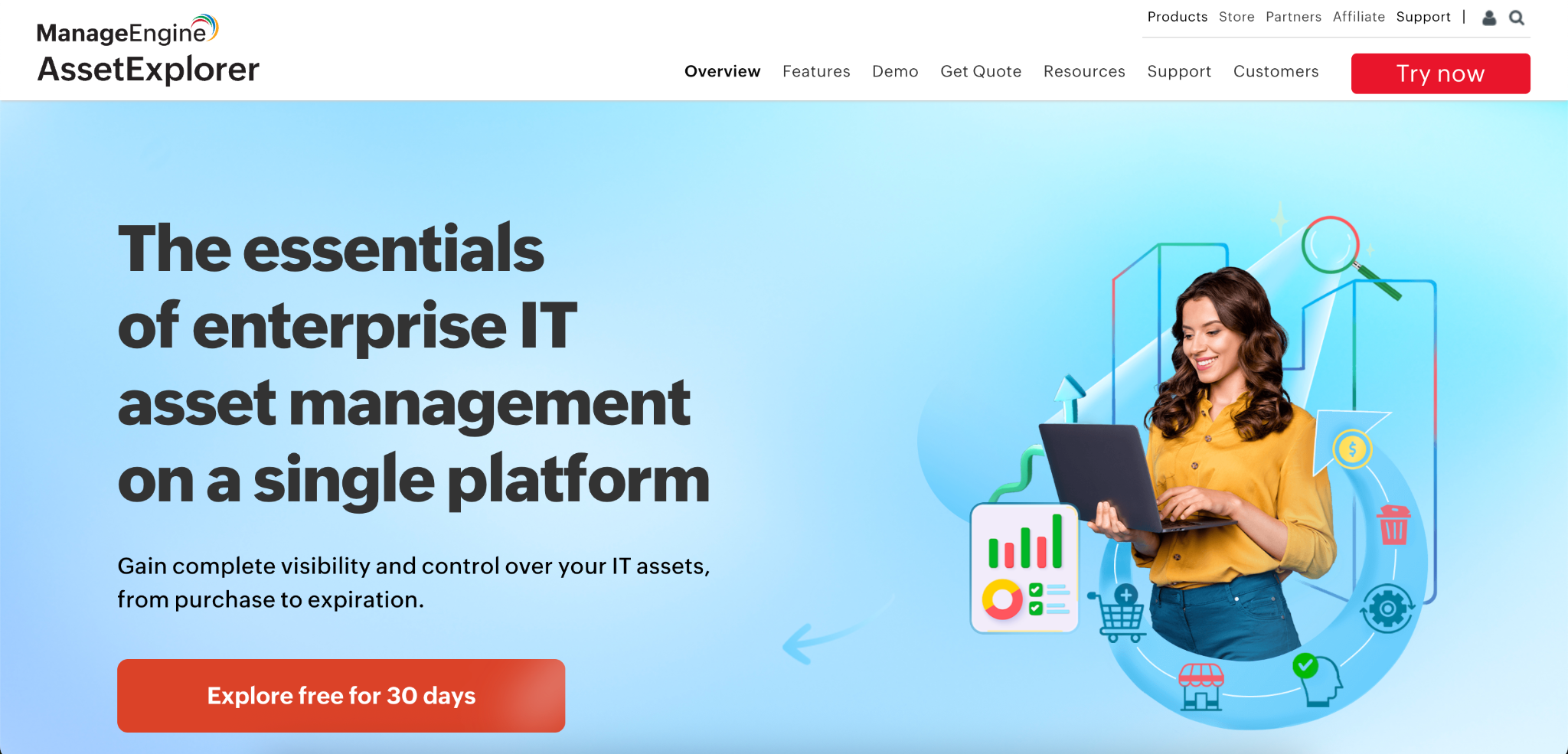
ManageEngine AssetExplorer is a comprehensive IT asset management solution that focuses on providing strong functionality at a more accessible cost compared to many enterprise platforms.
Its biggest strength is value for money. It covers essential ITAM capabilities like asset tracking, software license management, purchase orders, and compliance reporting without the high complexity or cost of larger tools.
It supports both hardware and software asset management, along with contract and vendor tracking, making it a well-rounded solution for organizations that need full lifecycle visibility without heavy customization.
Where it stands out is practicality. It delivers most of the core ITAM features enterprises need without overcomplicating the setup, making it easier to adopt and manage.
Best for: Cost-conscious enterprises or teams already using the ManageEngine ecosystem
Consideration: Interface and user experience can feel less modern compared to newer platforms
6. IBM Maximo Application Suite
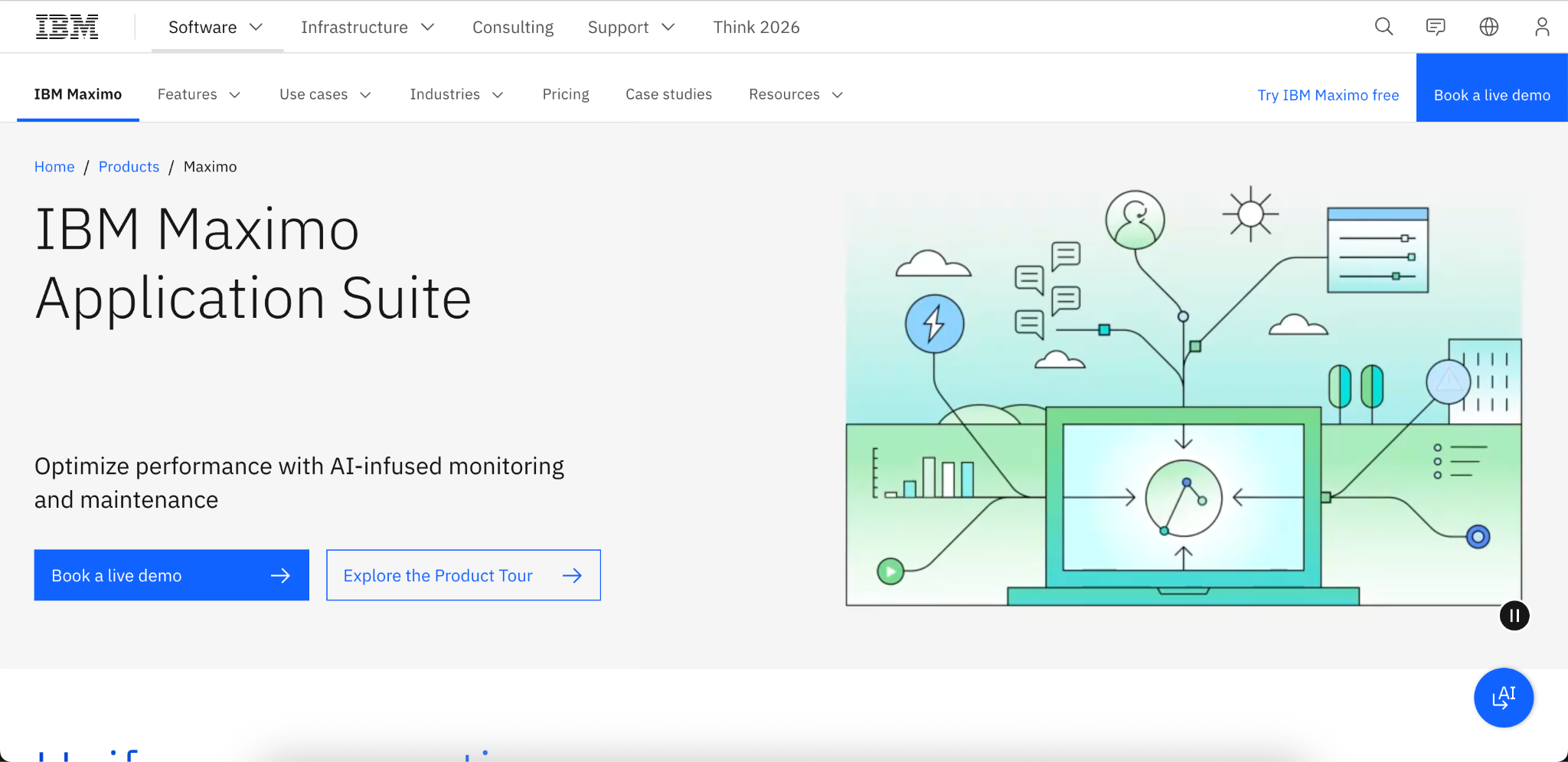
IBM Maximo Application Suite is an enterprise-grade asset management platform designed for organizations that manage large volumes of physical and operational assets.
Its biggest strength is its ability to handle complex, asset-intensive environments. It goes beyond traditional IT assets and supports infrastructure, equipment, and IoT-connected devices, making it suitable for industries like manufacturing, energy, and transportation.
It includes advanced capabilities such as predictive maintenance, real-time monitoring, and AI-driven insights powered by IBM Watson. These features help identify potential failures early and improve asset reliability over time.
Where it really stands out is in predictive maintenance. Instead of reacting to asset failures, it helps organizations anticipate issues and plan maintenance proactively.
Best for: Large enterprises with heavy physical or operational assets and IoT environments
Consideration: Complex to implement and typically requires significant investment
7. Ivanti IT Asset Management
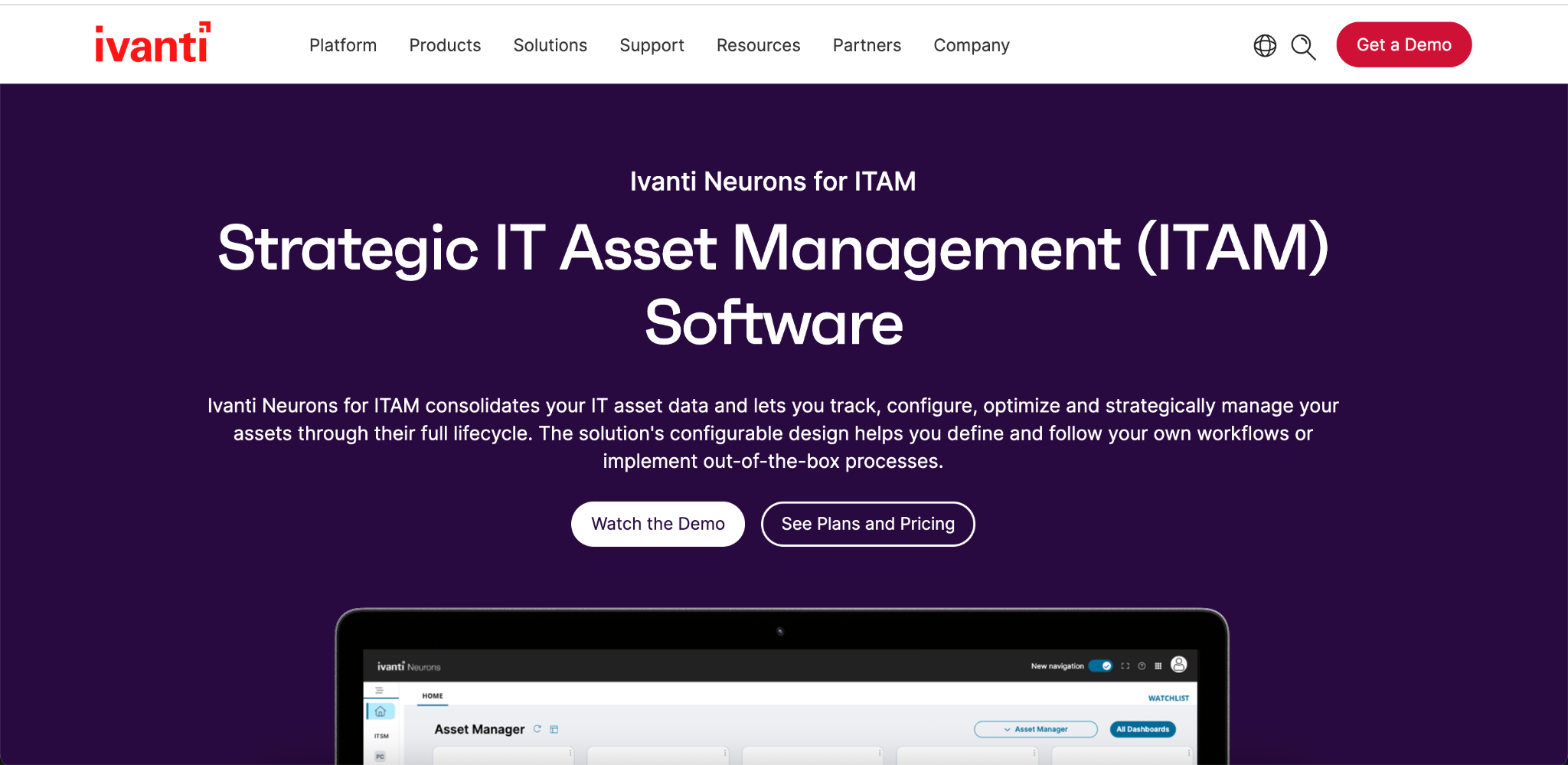
Ivanti IT Asset Management is an enterprise platform that combines asset management with security, compliance, and endpoint visibility in a single system.
Its biggest strength is its security-first approach. It not only tracks assets but also links them with vulnerability data, giving a clear view of which assets are exposed, unpatched, or at risk.
It supports automated asset discovery, software license management, patch tracking, and compliance reporting. Connecting asset data with security and endpoint management, it helps organizations manage assets and risks together instead of in separate systems.
Ivanti also integrates with patch management and endpoint security tools, making it easier to take action directly from asset insights rather than just monitoring them.
Where it really stands out is in actionable security. It doesn’t just show what assets exist; it helps identify risks and act on them quickly, which is critical in enterprise environments.
Best for: Enterprises with strong security, compliance, and endpoint management requirements
Consideration: Pricing can increase quickly with additional modules and enterprise features
Benefits of AI-Powered IT Asset Management
AI is changing IT asset management from something reactive into something far more proactive. Instead of just tracking assets, it helps understand how they behave, when they’ll fail, and where money is being wasted.
AI can predict when assets need replacement by analyzing usage patterns, failure trends, and lifecycle data. This helps avoid unexpected downtime and last-minute purchases.
It continuously tracks software usage and identifies unused or underutilized licenses. This makes it easier to reduce waste and optimize renewal decisions.
AI can detect unusual activity across assets, such as unexpected network behavior or sudden changes in usage. These signals often point to security risks or compliance issues early on.
With natural language querying, asset data becomes easier to access. Instead of complex queries, teams can simply ask questions and get instant answers.
Routine tasks like asset classification, updates, and renewal tracking can be automated, reducing manual effort and freeing up time for more important work.
Key Features to Look for in IT Asset Management Software
Automated asset discovery is essential so all hardware, software, and cloud assets are detected without manual input, ensuring nothing goes untracked
A centralized inventory or CMDB helps maintain a single source of truth, making it easier to track asset relationships, ownership, and lifecycle status
Software license management is critical to track usage, avoid over-purchasing, and stay compliant during audits
Full lifecycle management ensures assets are tracked from procurement to disposal, improving visibility and control at every stage
Real-time monitoring and alerts help identify performance issues, underutilized assets, or potential risks early
Integration capabilities allow the ITAM tool to connect with ITSM, HR, and procurement systems, making asset data more useful across the organization
Reporting and analytics provide insights into usage, costs, and asset performance, helping make better decisions and optimize resources
Automation features reduce manual work by handling updates, tracking, renewals, and lifecycle transitions efficiently
Conclusion
Managing IT assets without the right system quickly leads to gaps in visibility, rising costs, and unnecessary risks. As environments grow across cloud, SaaS, and on-prem, keeping everything aligned becomes harder without a structured approach.
That’s where IT asset management software makes a real difference. It brings everything into one place, automates tracking, and helps maintain control across the entire lifecycle.
But not all tools are built the same. Some focus on discovery, others on security or automation, and the right choice depends on what your environment actually needs.
The key is to choose a platform that fits your scale, integrates with your existing systems, and is easy enough for your team to use consistently.
When implemented well, ITAM software doesn’t just track assets; it helps reduce costs, improve efficiency, and make better decisions over time.
Frequently Asked Questions
What is IT asset management software?
IT asset management software helps track and manage hardware, software, and cloud assets throughout their lifecycle, providing visibility, control, and better cost management.
What are the key features of ITAM software?
Key features include asset discovery, centralized inventory, software license management, lifecycle tracking, reporting, automation, and integrations with ITSM and other systems.
Why do enterprises need IT asset management software?
Enterprises need ITAM software to manage large volumes of assets, reduce costs, maintain compliance, improve security, and gain better visibility across complex environments.
How does ITAM software reduce costs?
It identifies unused or underutilized assets, optimizes license usage, prevents over-purchasing, and helps manage renewals more effectively.
Can ITAM software track cloud and SaaS assets?
Yes, modern ITAM tools can track cloud resources, SaaS subscriptions, and virtual assets along with traditional hardware and software.
What is the difference between ITAM and ITSM?
ITAM focuses on managing IT assets, while ITSM focuses on delivering and managing IT services like incidents, changes, and requests.
How do I choose the right IT asset management software?
Choose based on your organization’s size, complexity, integration needs, and whether you prioritize ease of use, automation, or advanced enterprise features.